Aron Laszka

Aron Laszka

Assistant Professor

Pennsylvania State University

Biography

Aron Laszka is an Assistant Professor in the College of Information Sciences and Technology at the Pennsylvania State University. Previously, he was an Assistant Professor at the University of Houston, a Research Assistant Professor at Vanderbilt University, and a Postdoctoral Scholar at the University of California, Berkeley.

His research interests revolve around artificial intelligence and cyber-physical systems, focusing on machine learning for decision making and optimization, with applications in smart and connected communities, critical infrastructure, and cybersecurity.

His research is funded in part by the National Science Foundation, the Department of Energy, the Department of Transportation, and other agencies.


Open PhD Student Positions

Research Areas

Artificial Intelligence

Machine Learning, Optimization

Cyber-Physical Systems

Transportation, Power Systems, IoT

Cybersecurity

Decision Support, Data Analytics

Applied Artificial Intelligence Lab

Faculty

Avatar

Aron Laszka

Assistant Professor

Students

Avatar

Taha Eghtesad

Ph.D. Candidate

Avatar

Afiya Ayman

Ph.D. Candidate

Avatar

Amutheezan Sivagnanam

Ph.D. Candidate

Avatar

Chaeeun Han

Ph.D. Student

Alumni

Avatar

Soodeh Atefi

Ph.D.

Projects


*

AI-Powered Autonomy-Aware Neighborhood Mobility Zones

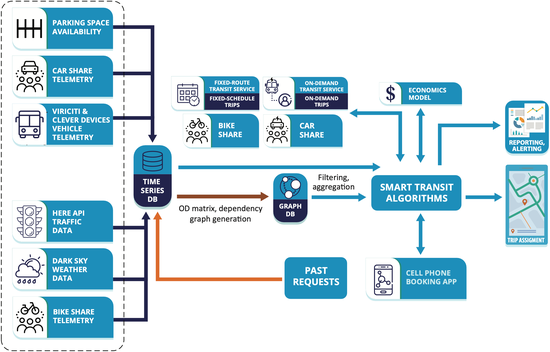
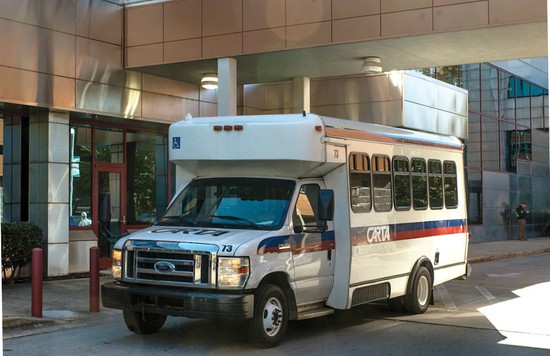
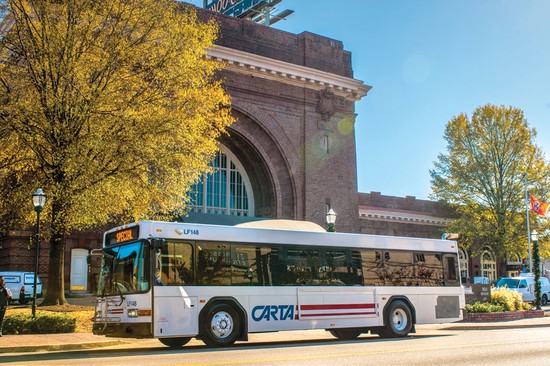
The AI-Powered Autonomy-Aware Neighborhood Mobility Zones project reimagines public transportation for mid-sized U.S. cities through an AI-driven, multi-modal mobility framework that integrates fixed-line buses and on-demand microtransit into a single, responsive system. Led by the Chattanooga Area Regional Transportation Authority (CARTA) with technical contribution from the Pennsylvania State University, Vanderbilt University, and Cornell University, this $7 million initiative is designed to enhance infrastructure utilization, mobility access, and financial viability of public transit in Chattanooga while providing a national model for AI-enabled mobility resilience.

Rural Transit Solutions for Enhancing Access & Connectivity

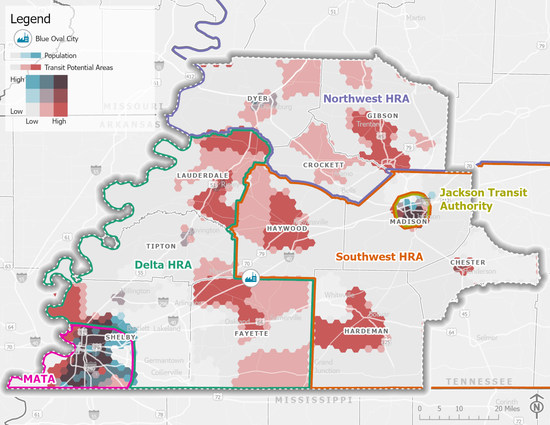
This Civic Innovation Challenge (CIVIC) Stage 1 project will perform research that attempts to address transportation challenges faced by residents and workers in rural areas around industrial hubs. Rapid economic growth in these areas demands efficient public transit systems that can serve a geographically dispersed workforce with strict arrival times. However, existing solutions often struggle with these unique requirements, leading to traffic congestion, pollution, and limited access to essential services for residents. This research project will develop and deploy a novel multi-modal transit system for Blue Oval City (BOC), a new rural industrial hub in Stanton, Tennessee. The system will combine fixed-line buses with on-demand micro-transit services, addressing the challenges posed by the geographically dispersed workforce and strict arrival times. Further, the project will design equitable fare structures to ensure that the system is sustainable for all stakeholders. If successful, the research will benefit communities around BOC by enhancing their access to employment opportunities, essential resources, and services, ultimately improving quality of life and community resilience. Furthermore, developing efficient and reliable transit can promote the growth of businesses in the surrounding areas and offer more affordable living options. The research findings and deliverables will be transferable to other rural industrial hubs across the nation, fostering economic development and improving public transportation infrastructure.

AI for Equitable and Resilient Food Distribution during Disasters

Food insecurity is the lack of consistent and reliable access to nutritious food. In the Houston (Texas) area, over 14% of Harris County households experienced food insecurity before the emergence of COVID-19. It is unclear how the nutritional needs of Houston’s vulnerable populations will be served when the next devastating weather event strikes the region, given that the city is already experiencing multiple disasters, including COVID-19, economic disruptions, and systemic food insecurity. The Houston Food Bank (HFB) collaborates with over 1,500 partners to address the needs of families experiencing food insecurity. The COVID-19 pandemic has stretched funding and personnel significantly while driving substantial increases in demand. HFB has adapted to past natural disasters, such as hurricanes and floods, in an ad hoc manner and seeks to build disaster resilience by incorporating strategies beyond current practices. The urgent needs are to identify food-insecure communities, understand their nutritional needs during disasters, and provide nutritious and culturally appropriate food in a manner that preserves privacy and dignity. Left unaddressed, these issues may create failures in HFB’s ability to distribute food effectively, equitably, and efficiently.

Equitable Electric Mobility: Smart Charging and Smart Parking

This Houston-based project establishes a collaborative process with community and commercial technology partners to accelerate the equitable development of accessible fast charging infrastructure and electric vehicle (EV) ownership for low income families by leveraging regional markets of early EV adopters. The novelty of the project lies in a community-driven participatory approach that integrates both social and technical dimensions, bringing transformational change to EV ownership and electrification of smart public transportation. This will be achieved using a data-driven model that integrates real-time data from micro-transit, fixed-route transit, and carpooling services to predict and overcome the uncertainties of traffic conditions, which would result in uncertain travel times and poor reliability. An engaging process establishes collaborative relationships, and identifies adopter indicators and incentives for equitable EV ownership and transit ridership. The project will result in a templet and framework for implementing smart transit hubs, which can be reapplied as best practices at other facilities of the Metropolitan Transit Authority of Harris County (METRO) or other transit systems.

AI-Engine for Optimizing Mixed-Fleet Transit Operations

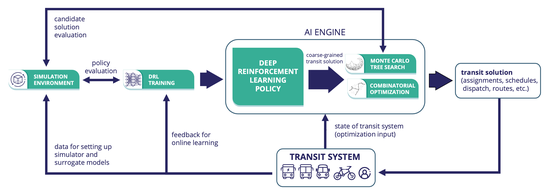
In every public transit system, a trade-off has to be made between concentrating service into very useful routes that serve large numbers of people and spreading service out to ensure that people everywhere have access to at least some service. Improving the efficiency of an existing system while enhancing service in terms of both usefulness and coverage presents considerable challenges. These challenges to operational efficiency are exacerbated by the requirement to provide complementary paratransit services, which are typically characterized by very low efficiency (energy per passenger per mile) and attendant high cost of operation. Our vision is to address these challenges by combining the complementary advantages of fixed- and dynamic-route transit services and seamlessly integrating them. We focus on the following objectives: minimizing energy used per passenger per mile, minimizing passenger wait and trip times, maximizing service coverage, and maximizing the percentage of daily trips serviced by transit. To explore this complex decision space, we will design, implement, and evaluate an artificial intelligence engine, which will enable agencies with mixed-vehicle fleets (EVs, ICEVs, etc.) to operate integrated fixed-dynamic transit services that maximize energy efficiency and make transit more accessible.

Microtransit Solutions for Underserved Communities

Public transportation infrastructure is an essential component in cultivating equitable communities. However, public transit agencies have historically struggled to achieve this since they are often severely stressed in terms of resources as they have to make the trade-off between concentrating service into routes that serve large numbers of people and spreading service out to ensure that people everywhere have access to at least some service. A solution that holds great promise for improving public transit systems is the integration of fixed-route services with microtransit systems: multi-passenger transportation services that serve passengers using dynamically generated routes and may expect passengers to make their way to and from common pick-up or drop-off points. However, most microtransit systems have failed in the past due to the lack of community engagement, inability to handle the uncertainty of operations when integrating the fixed transit, and inability to handle the system-level optimization challenges.

Addressing Transit Accessibility Challenges due to COVID-19

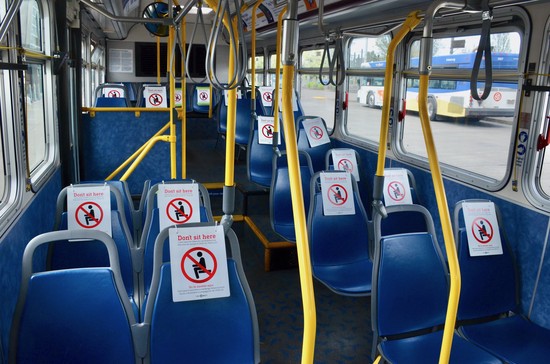
The COVID-19 pandemic has not only disrupted the lives of millions but also created exigent operational and scheduling challenges for public transit agencies. Agencies are struggling to maintain transit accessibility with reduced resources, changing ridership patterns, vehicle capacity constraints due to social distancing, and reduced services due to driver unavailability. A number of transit agencies have also begun to help the local food banks deliver food to shelters, which further strains the available resources if not planned optimally. At the same time, the lack of situational information is creating a challenge for riders who need to understand what seating is available on the vehicles to ensure sufficient distancing. In partnership with the transit agencies of Chattanooga, TN, and Nashville, TN, the proposed research will rapidly develop integrated transit operational optimization algorithms, which will provide proactive scheduling and allocation of vehicles to transit and cargo trips, considering exigent vehicle maintenance requirements (i.e., disinfection). A key component of the research is the design of privacy-preserving camera-based ridership detection methods that can help provide commuters with real-time information on available seats considering social-distancing constraints. The datasets and algorithms developed through this program will be swiftly released to the research community in order to encourage a wider collaborative effort that will help other transit agencies that face similar challenges.

Blockchain Security and Applications

This project studies the following research topics:

  • Security of blockchain-based consensus protocols
  • Secure smart contracts
  • Applications of blockchains

Efficient and Scalable Bug-Bounty Programs

Many organizations and companies have recently chosen to use so-called bug-bounty programs (also known as vulnerability reward programs), which allow outside security experts to evaluate the security of an organization’s products and services and to report security vulnerabilities in exchange for rewards. Bug-bounty programs provide unique benefits by allowing organizations to publicly signal their commitment to security and to harness the diverse expertise of thousands of security experts in an affordable way. Despite their rapidly growing popularity, bug-bounty programs are not well understood and can be mismanaged. As a result, bug bounty programs can waste substantial resources and they rarely live up to their potential to improve cybersecurity. This project will significantly improve the efficiency of bug-bounty programs by collecting and publishing comprehensive datasets on the bug-bounty ecosystem, by establishing a sound theory of bug-bounty programs, and by providing practical recommendations for organizations and regulators. The project will directly benefit organizations and companies by enabling them to manage bug-bounty programs more efficiently, which will allow them to eliminate security vulnerabilities at a lower cost; and it will also benefit users by improving the security of software products and services.

Data-Driven Energy Optimization for Multi-Modal Transit

The goal of this project is to develop a high-resolution system-level data capture and analysis framework to revolutionize the operational planning of a regional transportation authority, specifically the Chattanooga Area Regional Transportation Authority (CARTA). There is existing research on improving energy efficiency in transportation networks through analyzing energy consumption data per vehicle type and driving context. However, these studies are based on trip specific estimation and thus cannot be applied to a regional transportation network. Further, a number of these studies are based on simplified model estimation that is used within a simulation framework for analysis and are therefore difficult to validate during actual driving/road conditions that are not captured in the training dataset (which is typically limited in size and features).

Blockchains for Transactive Energy Systems

Due to rapid growth in renewable energy resources and improvements in battery technology, power grids are undergoing major changes, which create significant management and control challenges. To tackle these challenges, decentralized solutions are needed, which can support the evolution of electrical power distribution systems. Transactive energy is a decentralized solution for dynamically balancing demand and supply, in which consumers, prosumers (i.e., consumers with energy storage or generation capabilities), providers, etc. can trade energy in an open market.

Correct-by-Design Blockchain-based Smart Contracts

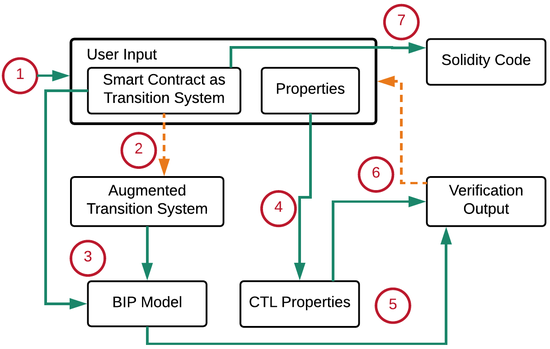
The adoption of blockchain based distributed ledgers is growing fast due to their ability to provide reliability, integrity, and auditability without trusted entities. One of the key capabilities of these emerging platforms is the ability to create self-enforcing smart contracts. However, the development of smart contracts has proven to be error-prone in practice, and as a result, contracts deployed on public platforms are often riddled with security vulnerabilities. This issue is exacerbated by the design of these platforms, which forbids updating contract code and rolling back malicious transactions. In light of this, it is crucial to ensure that a smart contract is secure before deploying it and trusting it with significant amounts of cryptocurrency.

Academic Experience


Assistant Professor

Pennsylvania State University

2022 – Present


Assistant Professor

University of Houston

2017 – 2022


Research Assistant Professor

Vanderbilt University

2016 – 2017


Postdoctoral Scholar

UC Berkeley

2015 – 2016


Postdoctoral Research Scholar

Vanderbilt University

2014 – 2015


Visiting Research Scholar

Pennsylvania State University

2013 – 2013

Academic Service

Program Chair

  • SMARTCOMP 2023 (8th IEEE International Conference on Smart Computing)
  • DI-CPS 2023 (3rd Workshop on Data-Driven and Intelligent Cyber-Physical Systems at CPS-IoT Week 2023)
  • DI-CPS 2022 (2nd Workshop on Data-Driven and Intelligent Cyber-Physical Systems at CPS-IoT Week 2022)
  • DI-CPS 2021 (1st Workshop on Data-Driven and Intelligent Cyber-Physical Systems at CPS-IoT Week 2021)
  • TREC4CPS 2018 (1st International Workshop on Trustworthy and Real-time Edge Computing for Cyber-Physical Systems)

General Chair

  • BlockNet 2020 (ACM MobiHoc Workshop on Blockchain for Network Resource Sharing)

Program Committee Member

  • ICLR 2026 (14th International Conference on Learning Representations)
  • AAAI-26 (40th AAAI Conference on Artificial Intelligence)
  • NeurIPS 2025 (39th Conference on Neural Information Processing Systems)
  • IJCAI-25 (34th International Joint Conference on Artificial Intelligence)
  • ICLR 2025 (13th International Conference on Learning Representations)
  • AAAI-25 (39th AAAI Conference on Artificial Intelligence)
  • NeurIPS 2024 (38th Conference on Neural Information Processing Systems)
  • DESTION 2024 (6th Workshop on Design Automation for CPS and IoT at IEEE/ACM CPS-IoT Week)
  • IJCAI-24 (33rd International Joint Conference on Artificial Intelligence)
  • AAMAS 2024 (23rd International Conference on Autonomous Agents and Multiagent Systems)
  • AAAI-24 (38th AAAI Conference on Artificial Intelligence)
  • NeurIPS 2023 (37th Conference on Neural Information Processing Systems)
  • IJCAI-23, Distinguished PC Member Recognition (32nd International Joint Conference on Artificial Intelligence)
  • ICCPS 2023 (14th ACM/IEEE International Conference on Cyber-Physical Systems)
  • AAMAS 2023 (22nd International Conference on Autonomous Agents and Multiagent Systems)
  • AAAI-23 (37th AAAI Conference on Artificial Intelligence)
  • DESTION 2022 (4th Workshop on Design Automation for CPS and IoT at IEEE/ACM CPS-IoT Week)
  • IJCAI-22, Distinguished PC Member (Top 3%) Recognition (31st International Joint Conference on Artificial Intelligence)
  • AAMAS 2022 (21st International Conference on Autonomous Agents and Multiagent Systems)
  • AAAI-22, Senior PC Member (36th AAAI Conference on Artificial Intelligence)
  • GameSec 2021 (12th Conference on Decision and Game Theory for Security)
  • AAMAS 2021 (20th International Conference on Autonomous Agents and Multiagent Systems)
  • FC21 (25th International Conference on Financial Cryptography and Data Security)
  • AAAI-21 (35th AAAI Conference on Artificial Intelligence)
  • GameSec 2020 (11th Conference on Decision and Game Theory for Security)
  • ICBC 2020 (2nd IEEE International Conference on Blockchain and Cryptocurrency)
  • AAMAS 2020 (19th International Conference on Autonomous Agents and Multiagent Systems)
  • FC20 (24th International Conference on Financial Cryptography and Data Security)
  • AAAI-20 (34th AAAI Conference on Artificial Intelligence)
  • GameSec 2019 (10th Conference on Decision and Game Theory for Security)
  • WEIS 2019 (18th Annual Workshop on the Economics of Information Security)
  • AAMAS 2019 (18th International Conference on Autonomous Agents and Multiagent Systems)
  • HotSoS 2019 (6th Annual Hot Topics in the Science of Security Symposium)
  • FC19 (23rd International Conference on Financial Cryptography and Data Security)
  • AAAI-19 (33rd AAAI Conference on Artificial Intelligence)
  • GameSec 2018 (9th Conference on Decision and Game Theory for Security)
  • AAMAS 2018 (17th International Conference on Autonomous Agents and Multiagent Systems)
  • WEIS 2018 (17th Annual Workshop on the Economics of Information Security)
  • AAAI-18 (32nd AAAI Conference on Artificial Intelligence)
  • GameSec 2017 (8th Conference on Decision and Game Theory for Security)
  • WEIS 2017 (16th Annual Workshop on the Economics of Information Security)
  • AAAI-17 (31st AAAI Conference on Artificial Intelligence)
  • GameSec 2016 (7th Conference on Decision and Game Theory for Security)
  • IJCAI-16 (25th International Joint Conference on Artificial Intelligence)
  • SecMAS 2016 (AAMAS-16 Workshop on Security and Multi-Agent Systems)
  • FC16 (20th International Conference on Financial Cryptography and Data Security)
  • GameSec 2015 (6th Conference on Decision and Game Theory for Security)
  • WEIS 2015 (14th Annual Workshop on the Economics of Information Security)
  • WEIS 2014 (13th Annual Workshop on the Economics of Information Security)

Work-in-Progress Track Chair

  • HotSoS 2021 (8th Annual Hot Topics in the Science of Security Symposium)

Tutorial Chair

  • ICBC 2020 (2nd IEEE International Conference on Blockchain and Cryptocurrency)

Publicity Chair

  • GameSec 2015 (6th Conference on Decision and Game Theory for Security)

Reviewer for Journal

  • ACM Transactions on Cyber-Physical Systems
  • ACM Transactions on Internet Technology
  • ACM Transactions on Privacy and Security
  • IEEE Access
  • IEEE Communications Letters
  • IEEE Computer
  • IEEE Internet of Things Journal
  • IEEE Journal on Selected Areas in Communications
  • IEEE Power Engineering Letters
  • IEEE Software
  • IEEE Transactions on Control of Network Systems
  • IEEE Transactions on Dependable and Secure Computing
  • IEEE Transactions on Industrial Informatics
  • IEEE Transactions on Information Forensics and Security
  • IEEE Transactions on Mobile Computing
  • IEEE Transactions on Smart Grid
  • IEEE Transactions on Systems, Man and Cybernetics
  • IEEE/ACM Transactions on Networking
  • Artificial Intelligence Review
  • Automatica
  • Autonomous Agents and Multi-Agent Systems
  • Autonomous Robots
  • Computers & Security
  • Cyber-Physical Systems
  • European Journal of Operational Research
  • International Journal on Software & Systems Modeling
  • Journal of Big Data
  • Journal of Cleaner Production
  • Journal of Cybersecurity
  • Mathematical Social Sciences
  • Pervasive and Mobile Computing
  • Royal Society Open Science
  • Telematics and Informatics Reports

Reviewer for Conference

  • KDD 2025 (31st SIGKDD Conference on Knowledge Discovery and Data Mining)
  • ECAI 2023 (26th European Conference on Artificial Intelligence)
  • ICML 2022 (39th International Conference on Machine Learning)

Education


CrySyS Lab, Budapest University of Technology and Economics

Ph.D. in Computer Science, Summa cum Laude

2011 – 2014


Budapest University of Technology and Economics

M.Sc. with Honors in Computer Engineering

2009 – 2011


Budapest University of Technology and Economics

B.Sc. with Honors in Computer Engineering

2005 – 2009

Talks

Data-driven Optimization of Public Transit Services with Mixed Fleets of EVs and ICEVs

Urban Tech Academy 2023 at Cornell Tech Nov 2023

New Directions on Artificial Intelligence and Cognition for Cyber Deception

Future of Cyber Deception, ARO Workshop at CMU Oct 2023

Blockchain-based Smart Contracts: Security Challenges and Correct-by-Design Development

Joint Workshop of NTT Labs and NTT Research Dec 2019

Economics of Crowdsourced Cybersecurity: Market Mechanisms in Bug Bounty Programs and Platforms

Workshop on Competitive Economics of Cybersecurity at Sandia National Laboratories Nov 2018

Resilient and Trustworthy Transactive Platform for Smart and Connected Communities

18th Annual High Confidence Software and Systems Conference (HCSS 2018) May 2018

Games of Timing for Security

Session on Game Theory in Security and Privacy at the 2017 INFORMS Conference Jan 2017

Vulnerability of Transportation Networks

Smart Cities Workshop at the 54th IEEE Conference on Decision and Control Dec 2015

Teaching

Deep Reinforcement Learning(IST 597)

Pennsylvania State University 2025 Spring

Data Mining II(IST 558)

Pennsylvania State University 2024 Spring

Introduction to Data Sciences(DS 200)

Pennsylvania State University 2022 Fall – 2023 Fall, 2024 Fall

Foundations of Security(COSC 6347)

University of Houston 2020 Fall, 2021 Fall

Cybersecurity(COSC 3371)

University of Houston 2019 Fall – 2020 Spring, 2021 Spring, 2022 Spring

Web Security(COSC 4371)

University of Houston 2018 Spring – 2019 Spring

Computer Organization(CS 2231)

Vanderbilt University 2017 Spring

Network Security(CS 4285, CS 5285)

Vanderbilt University 2016 Fall

Security of Cyber-Physical Systems(CS 396-02)

Vanderbilt University 2015 Spring

Contact