George Gunter

George Gunter

Postdoctoral Researcher
Pennsylvania State University
George is a postdoctoral researcher studying formal methods (FM) approaches for real-time control of transit systems. He is interested in using FM approaches to study how we can assure properties of transit operation while also balancing the performance of surrounding traffic flows. George previously received his Ph.D. from the Vanderbilt University Civil Engineering department, and his bachelor’s degree from the University of Illinois at Urbana-Champaign Civil Engineering department.
Formal Methods Safety-Critical Control Intelligent Transportation Systems

Control Barrier Function Based Speed Control for Fixed-Line Transit Headway Management

We present a control barrier function (CBF) approach for headway management in fixed-line transit systems (FTLSs) through vehicular speed control. We frame headway management as a …

avatar
George Gunter
•

Computing Headway Bounds Under Worst-Case Bunching in Fixed-Line Transit Systems

Vehicle bunching is a major problem for transit operators. When vehicles bunch together, the lead vehicle will service the majority of passenger demand, leaving the following …

Michael Yuhas
•
Fixed-Line Transit 2.0: Real-Time Optimization of High-Frequency Transit Service featured image

Fixed-Line Transit 2.0: Real-Time Optimization of High-Frequency Transit Service

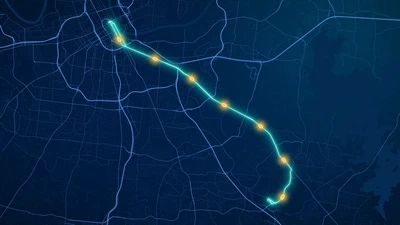
This project will develop and deploy a real-time, AI-driven decision support system that makes high-frequency bus service more reliable by anticipating and proactively mitigating delays, overcrowding, and service disruptions. Frequent, high-ridership bus routes are inherently unstable: when a bus falls behind, it encounters more waiting passengers and falls even further behind, until buses bunch together and leave long gaps in service, causing longer and less predictable waits, overcrowding, and missed transfers. The project focuses on WeGo Public Transit’s Route 55 Murfreesboro in Nashville, Tennessee, WeGo’s busiest route with nearly 5,000 weekday boardings, but also its least reliable one: more than 1 in 4 buses are either bunched or gapped, adding up to over 105 hours of excess waiting time for passengers every weekday.